Medusa Gothic: Command Attention with Romanesque Serif Typography
Capturing a viewer's gaze in a saturated digital landscape requires more than just a good idea; it demands a visual anchor that is both unique and timeless. For designers seeking a typeface that merges historical weight with modern flair, Medusa Gothic emerges as a standout solution. This Romanesque serif display font is not merely a collection of letters but a carefully crafted tool designed to transform standard titles and logos into commanding visual statements. By blending classic Roman letter-forms with undulating, organic details, it offers a fresh perspective on Gothic typography that feels both familiar and intriguingly new.
The Anatomy of a Unique Typeface
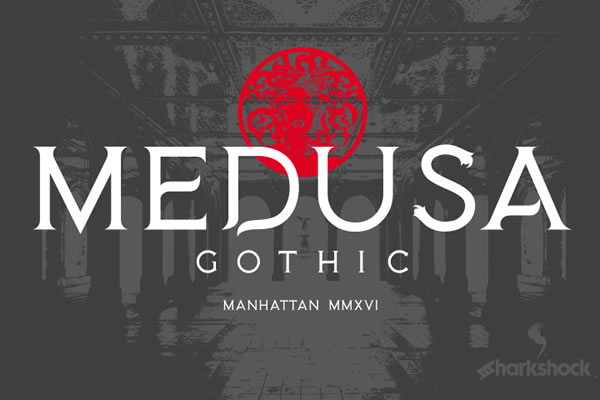
Understanding the specific characteristics of Medusa Gothic is essential for leveraging its full potential. The font is custom-tailored for display use, meaning it excels in high-impact scenarios rather than long-form body text. Its defining feature lies in the subtle, leaf-like ornaments that gracefully hug the ends of the lowercase letters c, j, and s. These organic flourishes add a touch of nature to the otherwise structured Romanesque forms, creating a visual texture that draws the eye.
However, versatility remains key. If a cleaner aesthetic is required, designers can simply switch to all caps to remove these decorative elements, revealing a more traditional, unadorned serif structure. This dual nature allows for greater flexibility within a single font family.
Key Features for Designers
- Custom Ornaments: Unique leaf-like details on specific lowercase characters for added character.
- Lightweight Design: The typeface features a light weight that, when combined with liberal kerning, expands horizontally to fill space elegantly.
- Character Support: Includes Basic Latin, Extended Latin, and essential kerning pairs.
- Display Focus: Optimized for titles and logos, ensuring high readability at large scales.
Practical Applications in Visual Design
The true value of any design asset lies in its application. Medusa Gothic is engineered to solve specific visual challenges across a variety of creative projects. Its ability to "gobble up horizontal space" makes it particularly effective for layouts that require a strong, wide presence without appearing heavy or cluttered.
Branding and Logo Design
In the realm of brand identity, a logo must be memorable and distinct. The undulating glyphs of Medusa Gothic provide an immediate point of differentiation. For brands in the lifestyle, boutique, or creative sectors, this font can convey a sense of artisanal quality and sophistication. The Romanesque roots suggest stability and tradition, while the leaf-like details hint at growth and creativity.
Editorial and Packaging Design
For packaging design and editorial layouts, typography often dictates the visual hierarchy. Using Medusa Gothic for headlines creates a strong entry point for the reader. Its distinct style ensures that headlines do not get lost on the page, making it ideal for magazine covers, book titles, or product packaging that needs to stand out on a shelf.
Digital Marketing and Social Media
In the fast-paced world of digital marketing and social media graphics, stopping the scroll is paramount. The unique silhouette of Medusa Gothic breaks the monotony of standard sans-serifs often found in UI design. Using it for social media headers or advertisement overlays can instantly elevate the perceived quality of the content, making campaigns look more polished and professional.
Integrating Typography into Your Design Workflow
When selecting a typeface like Medusa Gothic, it is crucial to consider the broader context of your design system. Typography does not exist in a vacuum; it interacts with color palettes, imagery, and layout composition.
Tips for Effective Implementation
- Contrast is Key: Pair the ornate style of Medusa Gothic with a simple, clean sans-serif for body text to ensure readability and balance.
- Scale Matters: Because this is a display font, avoid using it for small UI elements or fine print. Let it breathe at large sizes where its details can be appreciated.
- Check Your Punctuation: As noted, the font includes limited punctuation. Always verify that you have the specific characters required for your project before finalizing your design.
- Color and Texture: The light weight of the font pairs well with solid color backgrounds. However, it can also look stunning overlaid on textured backgrounds, such as vintage paper or natural materials, which complements its Romanesque aesthetic.
Ultimately, the choice of typography is a fundamental decision in the design workflow that impacts everything from user experience to brand perception. By choosing a typeface with character and utility, such as Medusa Gothic, designers can ensure their work is not only seen but remembered. Whether for a billboard, a game interface, or a boutique logo, thoughtful typographic choices bridge the gap between a concept and a compelling visual reality.